_edited_edited_edited_.png)

INFRARED THERMAL ROOF INSPECTION
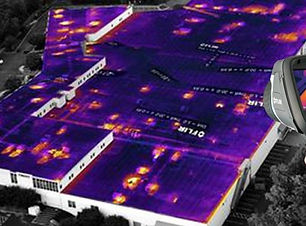
Infrared Thermal Roof Moisture Surveys of flat or low-sloped roofing is the preferred means of finding subsurface roof moisture, because the entire roof is inspected and all areas of wet insulation can be detected during the infrared roof scan. Thermography of low-sloped roofs must be performed under the proper weather conditions to be effective.
Roof thermographers follow national standards or guidelines such as the Infraspection Institute Standard for Infrared Inspection of Insulated Roofs or ASTM C1153-Standard Practice for Location of Wet Insulation in Roofing Systems Using Infrared Imaging as the standard of reference to performing Infrared roof scans.
The new International Energy Conservation Code (IECC) has insulation requirements that can dramatically increase the cost to replace a roof membrane on a commercial roof. If the roof is repaired instead of replaced, then these insulation requirements do not apply, so repairing that leaking roof has a significant cost savings factor built-in. Using Infrared Thermography can lead to finding energy-robbing roof leaks. This can save hundreds of thousands of dollars on a typical job.
Let TIP and ALTA Roofing & Waterproofing help extend the life of your existing roof and save you money!
INFRARED BASICS
During the day, the sun radiates solar energy onto the roof and into the roof substrate. Then at night, the roof radiates this heat back into outer space. This is called “radiational cooling” as the heat from the roof is radiated into the cooler upper atmosphere. Areas of the roof that are of a higher mass (wet) retain this heat longer than that of the lower mass (dry) areas. Infrared imagers can detect this subtle heat difference and “see” the warmer, higher mass areas, during the “window” of uneven heat dissipation.

COOL ROOFS OR SINGLE-PLY
Roof emittance is the characteristic of how effective the roof material will radiate the heat that is stored in it based on the materials used in the roof membrane.
During an infrared roof inspection, smooth-surfaced roofs can be quite reflective of a thermal imager due to the low viewing angle that is usually associated with inspections performed on foot from the roof surface.
This condition is most severe on cloudless nights when atmospheric humidity levels are low.

BENEFITS
There are important benefits of commercial infrared roof moisture inspections that building managers should keep in mind. Low slope, insulated, and flat roof systems, like anything else, need to be maintained to properly protect your capital investment. Frequent yearly IR roof Inspections should be done not only for your own knowledge but also to comply with Roof Manufactures Warranty.